How to Write a 1,000-Word Short Story: A Step-by-Step Drafting Plan

Most writers don't fail at the thousand-word story because they lack ideas. They fail because they sit down to "write a story," which is a vague instruction, and then discover forty minutes later that they have produced a mood, a character sketch, or three paragraphs of weather. A thousand words is not much room. It's roughly three pages, or one long coffee break. That's exactly why it works: it forces you to decide what the story is about before you begin.
What follows is a drafting plan you can follow in a single sitting. It isn't a formula for great literature. It's a way to get a finished draft onto the page with a clear shape, a reason for every scene, and enough room left over to make the prose itself interesting.
Start With a Premise You Can Say Out Loud
A premise is a situation plus a stake. Not a theme, not a feeling, not "a story about grief." A situation: who is where, and what do they want that they can't easily have? The stake is what it costs them to fail.
Here's a workable one: A retired locksmith is asked to open one last safe for the son of the man who ruined him. You can hold that in one hand. You already sense the scene, the tension, and the shape of the argument that will happen in the kitchen. That's the test. If your premise needs a second paragraph to explain, it's too big for a thousand words. Save it for something longer.
Write down five one-sentence premises. Then choose the one where you can immediately picture what happens next. Not the cleverest one — the most concrete one.
Keep the cast small
Two characters is plenty. Three is a crowd, and four is a novella. A thousand words gives you room for one protagonist, one opposing force, and possibly a background figure who never speaks. Every named character costs you words you'd rather spend on the turning point.
Give the Conflict a Face
Conflict in a short story needs a body. "She struggles with her own ambition" is a theme; "she has to tell her sister she's quitting the family business, at dinner, in front of their mother" is a scene. The second version can be lost. The protagonist can walk into that dinner and walk out having failed.
So ask the plain question: what can go wrong in the next twenty minutes of this character's life, and who is in the room when it happens? Then make sure the answer matters. A conflict the character could simply walk away from isn't a conflict, it's an errand.
You'll usually find two layers working at once. The external one drives the scene — the safe is opened, the sister is told, the lie is caught. The internal one drives the reader's sympathy — the locksmith wants to be needed, the sister wants to be forgiven. You don't need to state the internal layer. You need to let the external scene squeeze it out of them.
Write the Turning Point Before the Opening
Here's the habit that saves the most drafts: find your turning point before you write a single line of scene one. The turning point is the moment the character can no longer go back to how things were — the moment the safe swings open and what's inside changes the deal, or the moment the sister says the thing that can't be unsaid.
In a 1,000-word story, that moment usually lands between words 450 and 650. Not because there's a rule, but because that's roughly halfway, and halfway is where a reader needs something to shift.
Once you know your turning point, the opening writes itself, because you know what it has to set up. Your first scene has one job: put the character in the situation with the pressure already rising. Skip the commute. Skip the weather. Start close to the trouble and let the reader catch up.
End on the Change, Not the Explanation
New writers tend to end with a summary: what the character learned, how she felt about it, what it all meant. Resist this. The reader has just watched the change happen; explaining it deflates the story at the exact moment it should land hardest.
End on an image, a line of dialogue, or a small action that shows the new state of things. If the locksmith began by refusing to touch the safe, ending with him putting on his glasses and kneeling in front of it does the work of a paragraph of reflection. Keep the last line short. Let it sit alone on the page and stop.
One useful test: cover the final two sentences with your hand. Does the story still make sense? Good. Now read the final line by itself. Does it sound like the last note of something, or like a sentence that got tired?
A Timed Drafting Plan for One Sitting
Set a timer and keep your hands moving. The plan below assumes you already have your premise; if you don't, give yourself the first ten minutes and no more.
- 0–10 minutes — premise and outcome. Write your one-sentence premise at the top of the page. Underneath it, write one line describing how the story ends. You are allowed to change both later.
- 10–20 minutes — four beats. One sentence each: the opening situation, the complication, the turning point, the ending image. That's your whole architecture.
- 20–75 minutes — draft four scenes. Roughly 250 words each. Write in order, and don't stop to fix anything. If a scene stalls, write "[skip]" and move to the next beat.
- 75–90 minutes — read straight through. Mark weak spots in the margin with a single word. Do not edit yet. Standing up helps.
- Break, then 30 minutes the next day — one revision pass. Read aloud. Fix only what makes you stumble out loud, plus the cuts below.
If you have less than ninety minutes, halve the drafting block and write 250-word scenes as fast as you can. A rough complete draft beats a beautiful opening every time, because you can fix a whole story but you can't publish a third of one.
What to Cut and What to Feed
Drafts of this length usually come in either too long or too thin. The fix is the same in both directions: be ruthless about the general and generous with the specific.
- Cut the warm-up. Delete your first paragraph and read from the second one. It's almost always the real opening.
- Cut doubled scenes. If two scenes do the same job — two arguments, two phone calls — keep the sharper one.
- Cut explained feelings. "She felt a wave of guilt" can go. Show her washing a dish twice instead.
- Feed the senses. One smell, one sound, one texture per scene. Not five. One that only belongs to this story.
- Feed the dialogue. A short exchange adds speed and space. Two people not quite saying what they mean will carry 200 words for you.
Keep an eye on the budget as you revise: four scenes of roughly 250 words, plus a little breathing room. If one scene swells to 500, another has to shrink.
Before You Call It Finished
Read the whole thing out loud, slowly, and listen for the places where you skim. Those are the places your reader will skim too. Check the first sentence and the last sentence in isolation — they're the two lines that decide whether anyone remembers the story.
Then ask the honest question: can you summarise what changed, in one sentence, without using the word "realises"? If yes, you have a story. If not, your turning point is probably soft, and the fix is almost always in the middle, not the ending. Rewrite that one scene and read it again. Two passes on a thousand words will get you further than ten passes on a first chapter you never finish.
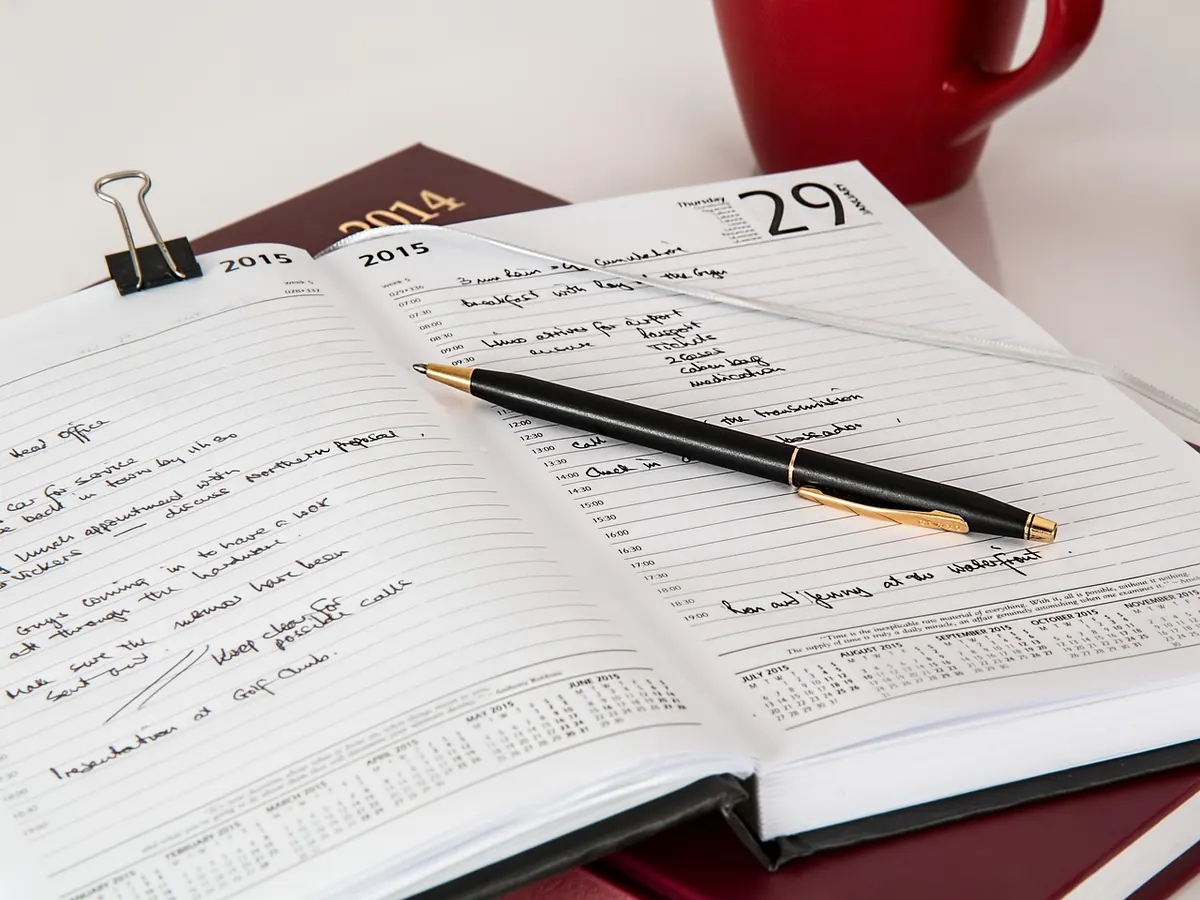
Photo: tookapic / Pixabay