Writing About Your Hometown Without Clichés: A Local Detail Exercise
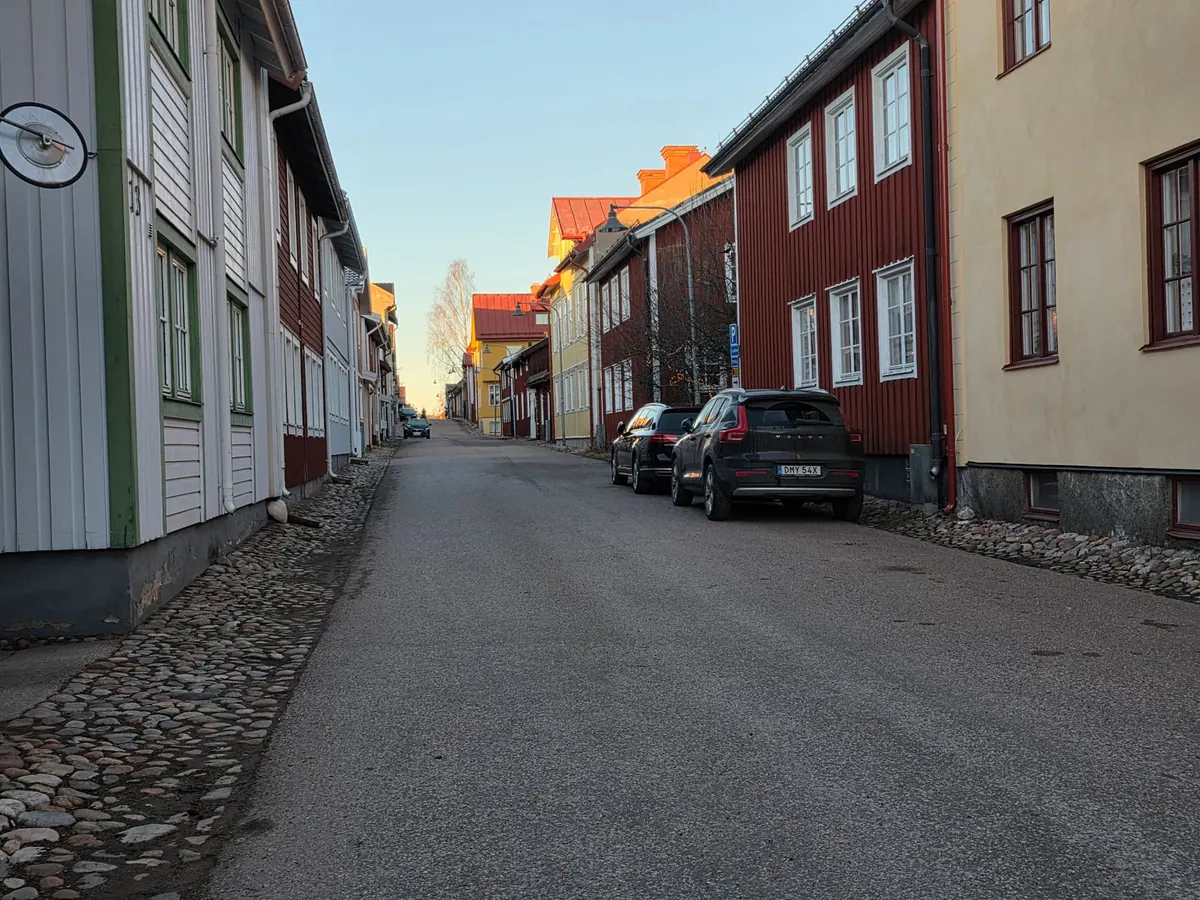
Every town has a version of itself that exists only in the sentences of people who left it. In that version the light is always golden, the bakery always opens at six, and somebody's grandmother is always waving from a doorway. It is warm, it is vague, and it could describe four hundred places at once.
Writing about home is difficult for reasons that have little to do with talent. Familiarity flattens detail. You stop seeing the thing you pass every day, and what rushes in to fill the gap is summary: quiet streets, strong community, simpler times. The fix is not more feeling. It is more looking, plus a method for catching what you look at.
Where the Clichés Actually Come From
A cliché is usually a true observation that arrived too early. "A town where everyone knows your business" may be accurate, but as an opening line it does no work, because the reader has nothing to attach it to. Generalizations are the destination of good writing about a place, not the starting point. The reader wants the evidence first, then the pleasure of drawing the conclusion themselves.
So the job is not to avoid meaning. It is to delay it. Spend the first draft collecting, not explaining. This feels wrong at the time, like packing for a trip you have not planned. Trust it. A paragraph about the exact wording on a hand-painted sign will tell a reader more about your hometown's economy and pride than three paragraphs of reminiscence.
Draw the Map From Memory, Then Correct It
Take a blank sheet and draw the centre of your hometown as you remember it. No reference material, no street view, no asking anyone. Give yourself fifteen minutes. Mark the places that matter practically: where you buy bread, where the bus stops, the shortcut behind the church, the bench nobody sits on after dark.
The drawing will be wrong. It is supposed to be. Streets will be too long or missing entirely; a whole block will be absent; you will have moved a shop two corners over because that is where it belongs in your memory. When you can, walk the real route or look at a real map and note the gaps.
That list of errors is the most valuable page in your notebook. You forgot the pharmacy but remembered the newsstand. You shortened the hill because you climbed it as a child. Every misplacement is a fact about how you lived there, which is exactly the material a reader cannot get anywhere else.
Keep a Ledger of Five Kinds of Detail
Abstract memories resist description. Concrete categories give you something to hunt for. Set up five columns in a notebook and fill them over a week, ideally during a visit, or from photographs and phone calls if you are far away.
- Surfaces. What things are made of and how they feel: the loose kerb stone by the school gate, the rubber mat worn smooth at the entrance to the post office, the door handle polished bright by hands.
- Sound at three fixed hours. Seven in the morning, three in the afternoon, eleven at night. Deliveries, church bells, a specific scooter, the shutters. Write what you hear, not what it means.
- Signage, word for word. Opening hours that no longer match reality, a misspelling nobody has corrected since 1994, a hand-written notice taped inside a window, a plaque commemorating something small.
- Transactions. The exact words used at the counter. How a regular asks for the usual. What the barber says before he starts. Whether people queue in silence or talk the whole time.
- What has changed and what refuses to. The new supermarket, the closed workshop, and the one bench that survived two renovations.
Twenty entries is enough. Do not tidy them into sentences yet. A ledger of fragments is honest, and honesty is easier to style later than a polished paragraph of atmosphere.
Names Do the Work of Adjectives
The strongest nouns in any piece about a place are proper nouns. "A quiet café" is interchangeable and forgettable. The café everyone still calls by the surname of the family who ran it until the late nineties is not. Neither is the street that locals shorten to two syllables, or the square renamed twice while nobody changed what they call it.
Collect local vocabulary with the same care. Words that only make sense within a ten-minute walk of your old bedroom: dialect for mud, a nickname for a corner, the way people say a place name that outsiders get wrong. Use a few. Three is plenty; ten turns the page into a glossary.
Nobody in my family has called it the Piazza since the war. It is the Piazzetta, even on the map, even on the new sign, even in the mouths of people who were born after the sign went up. I spent years thinking this was stubbornness. It is closer to maintenance.
Notice what that passage does. It uses a name, a small contradiction, and one interpretive sentence held on a short leash. The reflection is allowed in, but it stays brief and it stays concrete.
Turn Detail Into Reflection Without Preaching
Specifics alone are a list. Reflection alone is a greeting card. The interesting writing happens where a single detail is pressed until it gives up a little meaning. Three questions do this well.
What did this teach me to expect? A town with one bus on Sundays teaches you to plan, or to stay. A square where older men sit all afternoon teaches you something about the difference between idleness and company.
What has this stopped being? Not "it was better then," which is nostalgia speaking, but the precise change: the workshop is a phone shop now, and the smell of cut wood has been replaced by nothing at all, which is its own kind of smell.
What does it cost to keep this? Habits survive because someone does the work. Ask who is doing it, and what happens when they stop.
Then apply a rule that saves a lot of decent drafts: after a strong concrete paragraph, resist adding "and that was when I understood something about belonging." Cut the explanation and let the detail stand. If the scene cannot carry the feeling, a sentence of commentary will not carry it either.
The One-Page Exercise
Set aside forty minutes. You will produce one page of specific prose, which is more useful than four pages of atmosphere.
- Write twelve proper nouns connected to your hometown: shops, streets, nicknames, a team, a festival, a building.
- Cross out any you could not explain to a stranger without a full paragraph. Keep the three that feel slightly embarrassing to explain.
- For each one, write a scene of sixty to a hundred words in which somebody does something. Not describes, does.
- Remove every adjective that is not supported by a fact in the same sentence. "Beautiful" goes. "Painted green in 1998 and repainted every spring" stays.
- Read the three scenes and write one sentence about what they have in common. That sentence is your reflection.
- Place it at the end, then try deleting it. Keep whichever version is better. Usually it is the deleted one.
Repeat the exercise in a month with different nouns. The material will not run out, because a hometown is not a subject you finish; it is one you keep re-reading.
Photo: Nicole Davenport / Pexels